Accounting Software Ireland
Choosing and implementing the right accounting system affects how a business records transactions, manages invoices, reconciles bank activity and prepares financial reports. Our accounting software Ireland services help businesses assess their current processes, select suitable software and establish a reliable system for day-to-day financial management.
Finsoul Ireland supports Irish businesses with accounting software selection, implementation, integration, data migration and ongoing system support. We consider your existing processes, finance requirements, users, reporting needs and other business systems before recommending an appropriate approach.
Accounting Software Solutions for Irish Businesses
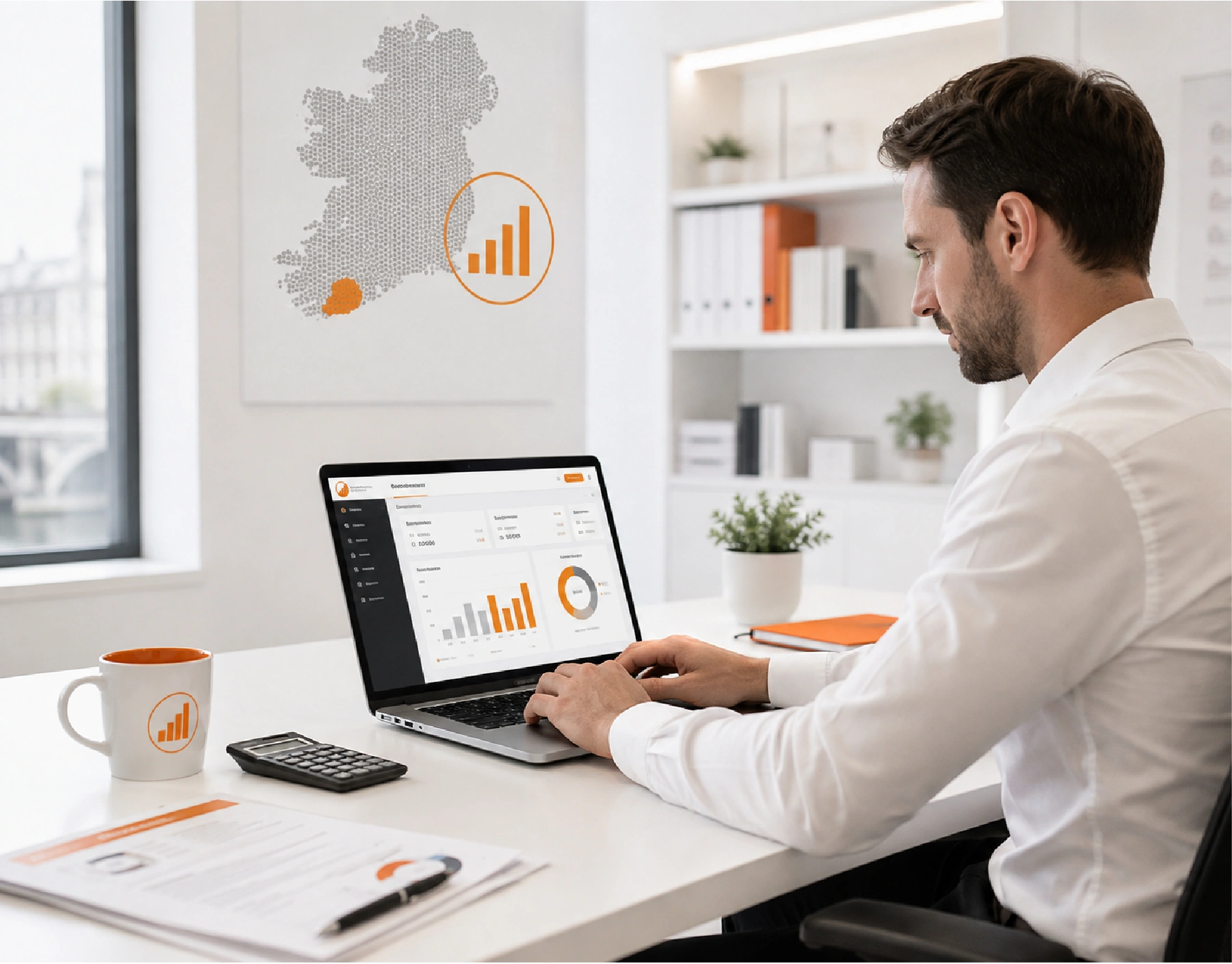
The right accounting system should support the way your finance team actually works. Our accounting software Ireland services cover the practical stages involved in moving to a new system or improving an existing one, from initial requirements assessment through configuration, testing and user support.
We work with businesses that need to replace spreadsheets, move away from older systems, introduce cloud accounting or connect finance software with other business applications. The objective is to establish accurate financial records, efficient processes and useful reporting without creating unnecessary complexity. Finsoul Ireland can also support businesses that already have accounting software but need help with configuration, integration, data quality or system performance. We assess the existing setup before recommending changes, helping management make informed decisions about technology investment.
Our Accounting Software Services
Our services cover software selection, implementation, integration, migration, and ongoing support. Each engagement can focus on one requirement or combine several stages into a complete accounting system project.

Accounting Software Selection
Selecting accounting software requires more than comparing product features. We assess your business requirements, transaction volumes, number of users, reporting needs, existing systems and expected future requirements. We then compare suitable options against these practical criteria. Our selection work considers functionality, user access, reporting, banking, VAT processes, integrations and implementation requirements. We also consider the needs of finance teams and external accountants so the selected system supports the wider financial reporting process.
Accounting Software Ireland Implementation
A successful implementation starts with correct system configuration. We support software setup, chart of accounts configuration, user creation, permissions, tax and VAT settings and workflow configuration. Before the system goes into regular use, we carry out appropriate checks to confirm that key functions work as expected. This can include testing transactions, approval workflows, reporting and connections with other business systems.
Cloud Accounting Software
Cloud based accounting software allows authorised users to access financial information through an online environment rather than relying on a single local installation. This can support finance teams working across different locations and make collaboration with accountants more straightforward. We can assist with cloud accounting setup, user permissions, system configuration and access arrangements. We also review how online processes fit with existing financial controls and reporting responsibilities.
Accounting Software Integration
Finance teams often rely on several systems for banking, payroll, customer management, payments and operational activities. Connecting these systems can reduce duplicate data entry and improve the flow of financial information. Our integration work can connect accounting platforms with payroll systems, banking services, CRM platforms, ERP applications and payment systems. We review the data exchanged between systems and test the connections to reduce errors in financial records.
Data Migration
Moving financial information from an existing platform requires careful preparation. We assess the source system, determine which records need to move and establish checks for the transferred information. Our migration support can include historical financial records, customer and supplier information, account balances and transaction data. We validate migrated information and reconcile key balances before the new system becomes the main accounting platform.
Accounting Software Support
After implementation, businesses may need assistance with user issues, system configuration, reporting or software changes. Our Accounting Software Ireland service provides a point of contact for technical and operational questions relating to the accounting system. We can assist with troubleshooting, system reviews, software updates, user support and ongoing maintenance. This allows finance teams to resolve system issues without having to manage every technical matter themselves.
Accounting Automation
Accounting automation can reduce manual work across routine financial processes. We can help configure bank feeds, automated reconciliation, invoice processing, expense management and payment workflows within the capabilities of the selected system. Automation should also maintain appropriate review and approval controls. We therefore consider the points at which finance staff need to verify transactions, exceptions or changes before information enters the financial records.
Benefits of Accounting Software Ireland
The right accounting system can improve the way a business records financial information, manages routine finance tasks and prepares reports. Professional implementation also helps ensure that the software supports established business processes rather than creating additional administrative work. Key benefits include the following:
More accurate financial records: Proper system configuration and data validation help reduce errors in accounting records.
Less manual administration: Automated bank feeds, invoice processing and reconciliation can reduce repetitive finance tasks.
Better financial visibility: Up-to-date financial information can help management monitor income, expenses, cash flow and business performance.
Improved reporting: Configured reporting functions can provide finance teams and management with clearer information for business decisions.
Stronger financial controls: User permissions, approval workflows and defined processes can help improve control over financial transactions.
Efficient data management: A structured accounting system can keep financial records organised and make information easier to access.
Better system connectivity: Integrations with banking, payroll, CRM and payment systems can reduce duplicate data entry and improve information flow.
Support for business growth: A suitable accounting platform can accommodate additional users, higher transaction volumes and changing reporting requirements.
Easier collaboration: Online systems can allow authorised finance staff, management and accountants to access relevant financial information from different locations.
Reduced system disruption: Professional implementation, testing and ongoing support can help businesses address technical issues and maintain reliable accounting processes.
Time savings for finance teams: Reducing manual data entry and repetitive administrative tasks can free up finance staff to focus on analysis, planning and other higher-value activities.
Improved audit and compliance readiness: Organised records, clear transaction history and structured reporting can make it easier to respond to audit requests and demonstrate compliance with financial reporting requirements.
Accounting Software We Support
Businesses in Ireland use different accounting platforms according to their size, sector, reporting requirements and existing technology. Our role is to assess the business requirement first and then support an appropriate software choice.
- Xero Accounting Software: Cloud accounting software for businesses that need online bookkeeping, invoicing, bank reconciliation and financial reporting. Xero also provides functionality for sole traders and self-employed businesses.
- QuickBooks: Accounting software supporting bookkeeping, invoicing, expenses, reporting and day-to-day financial management.
- Sage Accounting Software: Accounting solutions covering financial management, reporting, invoicing and related business functions. Sage provides products for small businesses, sole traders and larger organisations.
- Microsoft Dynamics 365 Business Central: Business management software suited to organisations that require broader financial and operational management across multiple business functions.
- ERP Accounting Software: Suitable for organisations that need accounting functions connected with wider business operations such as purchasing, inventory, sales, projects and reporting.
Software recommendations depend on your business size, accounting requirements, existing systems, reporting needs, number of users and integration requirements. Software recommendations depend on your business size, accounting requirements, existing systems, reporting needs and number of users.
How We Implement Accounting Software
Our implementation process gives each project a defined sequence, from understanding the existing finance environment to supporting users after the system becomes operational.
Assess Your Requirements
We review your current accounting processes, systems, users, and reporting requirements. We also identify manual tasks, duplicated information and areas where existing processes create unnecessary administrative work.
Select the Right Software
We identify suitable accounting software based on your operational and financial requirements. The assessment considers functionality, user access, reporting, integrations, banking, VAT requirements and the level of technical support required.
Configure the System
We configure accounts, users, permissions, tax settings, workflows and reporting structures. The configuration should reflect your actual finance processes rather than relying on generic settings that may not suit the organisation.
Migrate Your Data
We transfer relevant financial information from the existing system and carry out validation checks. Key balances, account structures and historical information are reviewed so the new system starts with reliable data.
Integrate Your Systems
We connect accounting software with banking, payroll, CRM, payment platforms and other relevant systems. We test the connections and review how information moves between applications.
Provide Ongoing Support
We provide technical assistance, system reviews and ongoing accounting software support after implementation. Support can cover user queries, configuration changes, troubleshooting and system maintenance.
Accounting Software for Businesses in Ireland
Our services can support businesses at different stages of development and with different finance requirements.
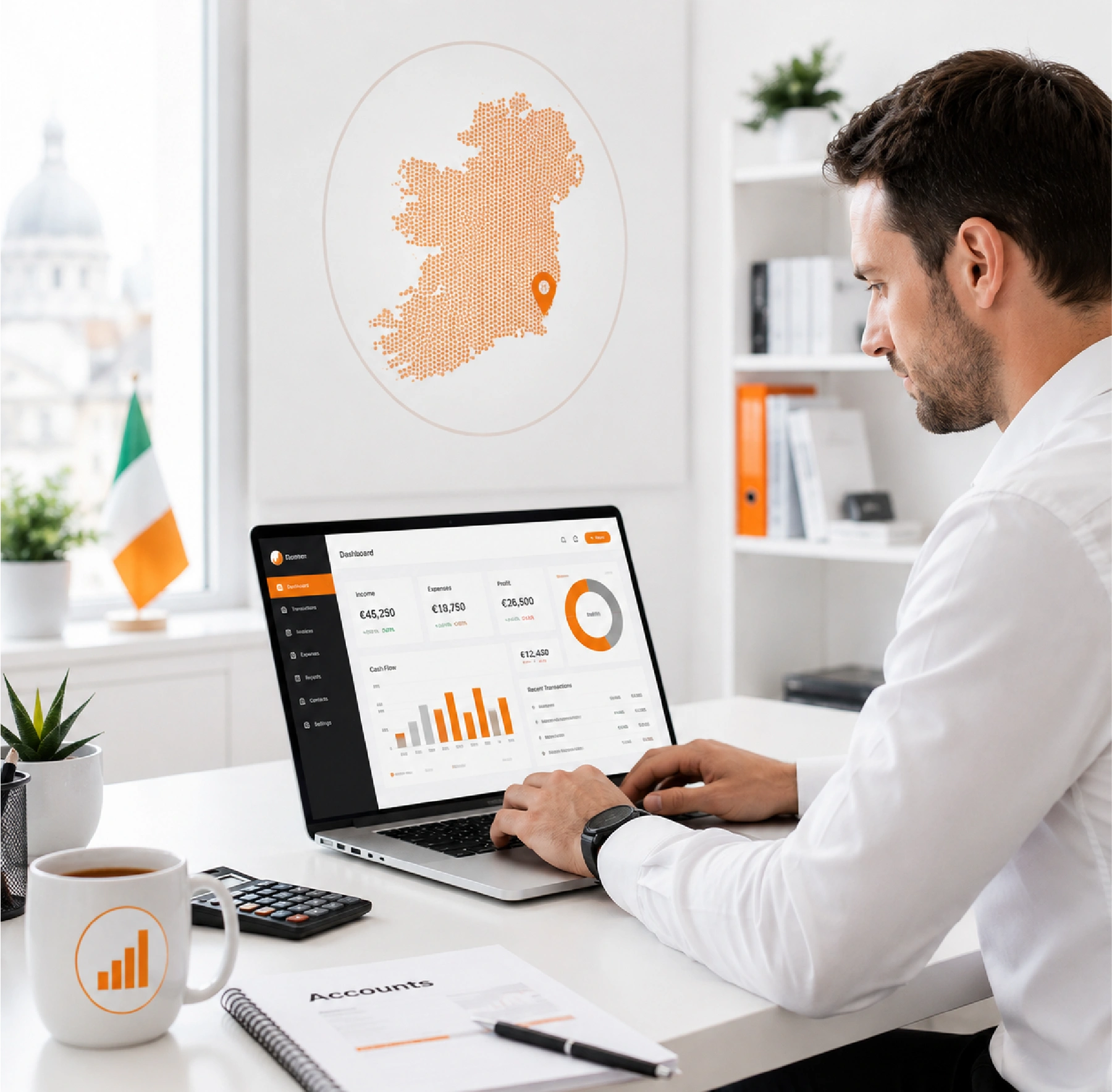
- SMEs: Support with software selection, setup, reporting and finance processes.
- Start-ups: Assistance with establishing an appropriate accounting system from the beginning.
- Growing businesses: Support when transaction volumes, users or reporting requirements increase.
- Professional services firms: Systems for managing invoices, expenses, projects and financial reporting.
- Retail businesses: Accounting systems that can work alongside payment, sales and inventory processes.
- Construction companies: Support for finance processes involving projects, suppliers, expenses and reporting.
- Multi-user finance teams: User permissions, workflows and system access for different finance responsibilities.
- Organisations replacing legacy systems: Migration planning, data transfer, testing and implementation support.
For smaller businesses, sole trader accounting software can provide the functions required for invoicing, expense recording, bank reconciliation and financial reporting without the complexity of a larger finance platform. The right choice depends on transaction levels, VAT obligations and the way the business manages its records. Larger organisations may require financial accounting software with more detailed reporting, user controls, multiple entities or wider integration requirements. We assess these needs before recommending an implementation route.
What Should You Consider Before Choosing Software?
Software selection should start with the financial processes the business needs to manage. A system may offer many functions, but those functions only add value if they support your actual requirements. Before selecting an accounting platform, consider:
Number of users: Determine how many people need access and what level of permissions each user requires.
Transaction volumes: Consider the number of invoices, payments, expenses and other financial transactions processed each month.
VAT requirements: Check that the system supports the VAT processes and reporting requirements relevant to your business.
Bank connections: Review available banking integrations and bank feed functionality to reduce manual transaction entry.
Invoicing processes: Assess how the system handles customer invoices, recurring invoices, credit notes and payment tracking.
Reporting requirements: Check whether the software can produce the financial reports required by management, accountants and other stakeholders.
Approval procedures: Review whether the system supports appropriate approval workflows for expenses, payments and other transactions.
Business system integrations: Consider connections with payroll, CRM, payment platforms and other applications already used by the business.
User permissions and controls: For businesses requiring accounting software for financial services, assess access rights, audit trails, reporting controls, data handling and governance requirements.
Cloud access and security: Businesses considering cloud based accounting software should review access controls, user responsibilities, data transfer arrangements and procedures for maintaining accurate financial records.
Future requirements: Consider expected changes in users, transaction volumes, reporting needs and business operations before committing to a platform.
Total cost of ownership: Factor in subscription fees, implementation costs, integration expenses and ongoing support charges, rather than comparing only the headline software price.
Why Choose Our Accounting Software Services?
Finsoul Ireland combines accounting knowledge with practical technology support. We focus on the business processes behind the software rather than treating implementation as a purely technical exercise.
- Practical software selection: We compare systems against your actual finance and operational requirements.
- Professional implementation: We manage configuration, testing and system setup in a structured manner.
- Secure data migration: We apply validation and reconciliation checks when moving financial information.
- System integration: We help connect accounting software with relevant banking, payroll, CRM and payment systems.
- Accounting automation: We identify suitable processes for automation while retaining appropriate review controls.
- Ongoing technical support: We provide assistance after implementation for users and finance teams.
- Scalable solutions: We consider expected changes in users, transactions and reporting requirements.
- Business-focused advice: Recommendations remain connected to your financial processes, controls and reporting needs.
Accounting Software Implementation Cost in Ireland
The cost of implementation depends on the software selected, number of users, volume of historical data, required integrations and complexity of the finance processes.
| Service | Indicative Cost |
|---|---|
Basic accounting software setup |
€500–€1,500+ |
Standard implementation |
€1,500–€5,000+ |
Data migration |
€500–€3,000+ |
Software integration |
€1,000–€5,000+ |
Ongoing support |
€500–€2,500+/month |
Note: These figures are indicative rather than fixed quotations. A simple setup with limited data may require less work, while a larger implementation involving several systems, extensive historical records or multiple users may require a broader project.
Why Work With Finsoul Ireland?

Finsoul Ireland provides accounting software support with attention to financial processes, system controls, and practical business requirements. We work with management and finance teams to establish a clear implementation plan and keep project responsibilities defined.
- Experienced accounting and technology professionals: Support that combines financial and system knowledge.
- Business-focused software recommendations: Software choices based on actual business requirements.
- Professional implementation support: Assistance from configuration through testing and go-live.
- Integration and migration assistance: Support for connecting systems and transferring financial information.
- Ongoing system support: Continued assistance after implementation.
- Clear project communication: Straightforward updates on requirements, progress and outstanding actions.
Note: The above-mentioned services are provided via network firms if not provided directly
Speak to Our Accounting Software Team
Our accounting software Ireland support can help you select, implement and manage a system that fits your business processes and financial reporting requirements. Speak to our team to discuss your current system, implementation plans or software requirements.
Frequently Asked Questions
How do I choose accounting software for my business?
Start by reviewing your transaction volumes, users, reporting needs, VAT requirements, banking processes and existing business systems. A software comparison should then assess the functions you actually need rather than selecting a platform based only on its feature list.
Can you migrate data from an existing accounting system?
Yes. We can review the existing system, identify the financial information that needs to move, transfer the agreed records and carry out validation and reconciliation checks. The migration scope depends on the quality, volume and format of the existing data.
Is cloud accounting suitable for a small business?
Cloud systems can suit small businesses that need online access, bank feeds, invoicing, reporting and collaboration with their accountant. The appropriate system still depends on the business structure, finance requirements, number of users and level of control required.
Can accounting software connect with other business systems?
Yes. Many accounting platforms can connect with banking, payroll, CRM, payment and other business applications. The available integrations depend on the software and the specific systems involved, so the connections should be assessed before implementation.
How long does an accounting software implementation take?
Implementation time depends on the software, number of users, data volume, integrations and complexity of the finance processes. A basic setup may take considerably less time than a project involving historical data migration, several integrations and extensive configuration.
Business Insights & Latest Updates