
ERP Accounting Software Services in Ireland
Finsoul Ireland provides ERP accounting services for Irish businesses that need stronger control over financial information, accounting processes and business reporting. Our services cover system setup, configuration, erp software implementation, data migration, integration, automation, reporting, training and ongoing support. We work with businesses moving from spreadsheets, disconnected applications or legacy finance systems and help establish a structured accounting environment.
Our services are suitable for SMEs, growing companies and organisations with multiple entities, locations or complex financial processes. We begin by reviewing your existing systems and accounting requirements before defining the scope of the project. If you are selecting a new platform, replacing an existing system or improving an established ERP environment, our team can help you plan the accounting requirements and implementation stages.
Practical ERP Accounting Solutions for Irish Businesses
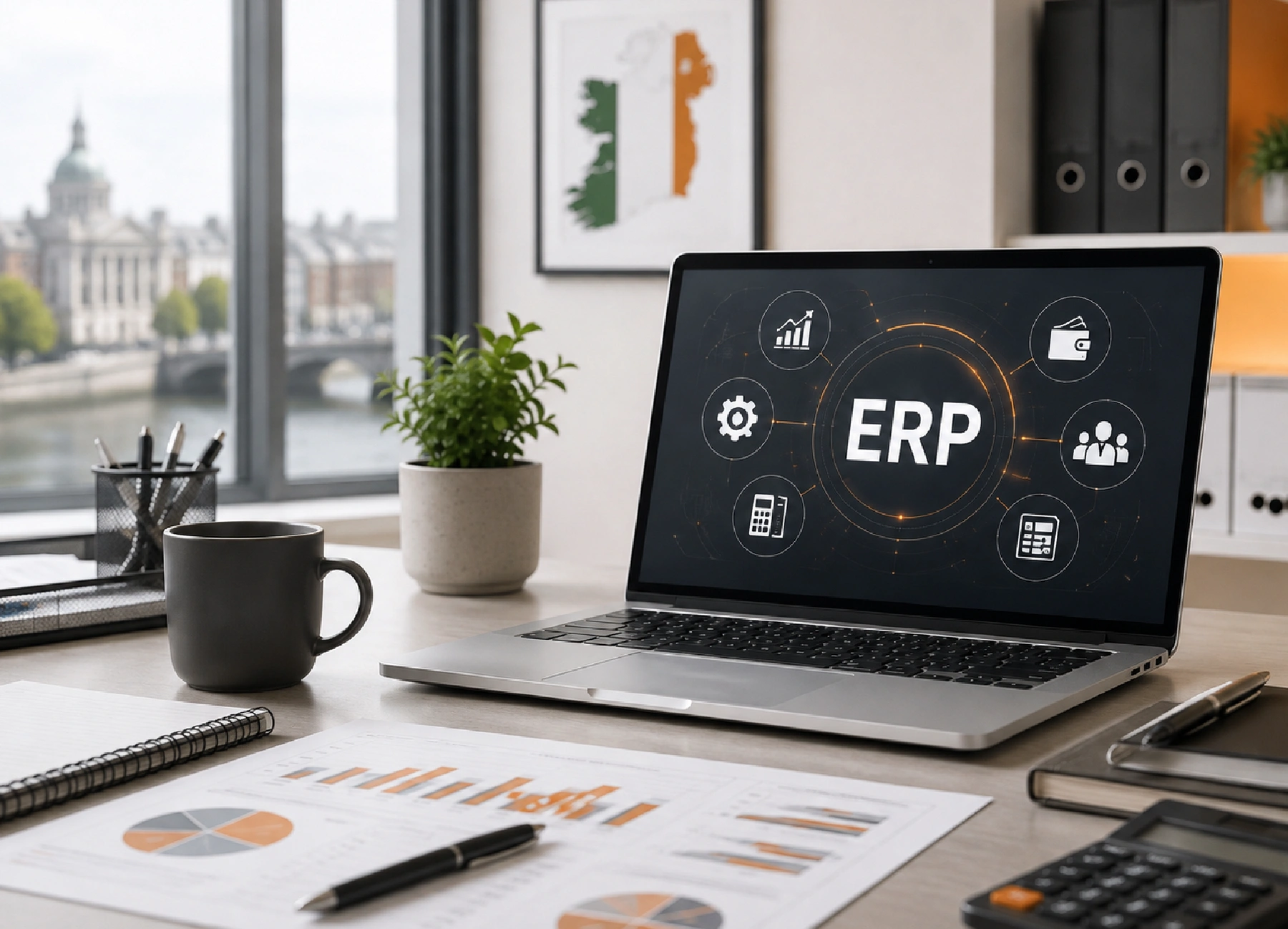
An ERP accounting system brings financial information and related business processes together in one controlled environment. Instead of maintaining separate spreadsheets and applications for different activities, businesses can connect finance with purchasing, sales, inventory, projects, and other operational functions. This can reduce duplicate data entry and improve the consistency of financial information.
Finsoul Ireland focuses on the accounting requirements within the wider ERP project. We help businesses establish suitable financial structures, reporting requirements, approval processes, user permissions and controls. The aim is to create an accounting environment that supports accurate transaction processing and gives management reliable information for financial decision-making.
Our ERP Accounting Software Services
Our services cover the main stages involved in establishing, improving and maintaining an ERP accounting environment. Finsoul Ireland can assist with a new system, migration from an existing platform or improvements to an established finance system.

ERP Software Setup and Configuration
We configure core accounting settings, financial periods, currencies, tax settings and company parameters according to your requirements. The configuration provides the foundation for transaction processing and financial reporting.
ERP Accounting System Implementation
Our erp software implementation service covers project planning, system configuration, process setup, testing and go-live preparation. We align accounting requirements with the wider ERP structure so finance processes operate correctly within the system.
ERP Data Migration and Conversion
Moving financial information requires careful preparation and validation. We review existing records, identify data that requires cleaning and determine which historical information should move into the new system. Migration checks help protect the accuracy of opening balances, customer records, supplier information and transaction data.
ERP Software Integration
Businesses often need their finance platform to exchange information with banking systems, payroll applications, CRM platforms, inventory tools and other operational software. We assess these requirements and help establish appropriate data flows between systems.
Chart of Accounts and Financial Configuration
A clear chart of accounts supports consistent transaction recording and useful management reporting. We help configure account structures, departments, cost centres, projects and other financial dimensions required by the organisation.
User Access and Role Configuration
We help define user roles and access permissions based on job responsibilities. Appropriate permissions support segregation of duties and help reduce the risk of unauthorised access or changes to financial records.
ERP Accounting Automation
We identify suitable processes for automation, including recurring entries, invoice workflows, approvals, reconciliations and selected reporting tasks. Automation can reduce repetitive administrative work while maintaining appropriate review procedures.
ERP Reporting and Financial Dashboards
We configure financial reports and dashboards around management requirements. Depending on the system, reporting may include profit and loss statements, balance sheet information, cash flow, receivables, payables, budgets and management accounts.
ERP Training and User Support
Users need to understand both system functions and the accounting processes they are expected to follow. We provide practical training for finance teams and relevant business users, covering workflows, transactions, reporting and user responsibilities.
Ongoing ERP Accounting Support
Post-implementation requirements can include configuration changes, reporting adjustments, user queries, process reviews and system administration. Our ongoing support helps businesses maintain their accounting environment as operational requirements develop.
How ERP Software Can Improve Your Business
The value of an ERP system depends on how well it supports the organisation’s actual financial processes. A properly configured platform can improve information flow, reduce unnecessary manual work and provide greater control over financial operations.
Centralise Financial Data: Bring financial records into a common environment so authorised users can work from consistent information.
Reduce Manual Accounting Work: Automate repetitive accounting activities and approval workflows to reduce administration.
Improve Financial Reporting: Give finance teams structured information for management accounts, budgeting and performance reviews.
Strengthen Financial Controls: Use permissions, approval workflows and audit records to support internal controls and corporate governance.
Support Business Growth: Establish processes that can accommodate additional users, entities, locations and transaction volumes.
Improve Access to Financial Information: Allow authorised users to access relevant financial information without relying on manual requests to the finance team.
How Our ERP Accounting Implementation Works
Finsoul Ireland follows a defined process for erp software implementation, with accounting requirements considered before configuration begins. The project focuses on business requirements, data quality, system controls, testing and user readiness.

- Business and Accounting Requirements Assessment: We review existing accounting processes, reporting requirements, system limitations and operational needs.
- ERP System Planning and Configuration: We establish the required accounting settings, financial dimensions, workflows, user roles and approval structures.
- Data Migration and System Integration: We prepare approved financial data for migration and establish connections with relevant business applications.
- Testing and Validation: We test transactions, reports, workflows, permissions and migrated records before go-live.
- User Training and Go-Live: Finance teams and relevant users receive practical training before the agreed launch date.
- Ongoing Support and Optimisation: We provide post-launch assistance for system issues, reporting changes and configuration requirements.
ERP Software for Different Business Needs
ERP requirements vary according to company size, industry, transaction volumes and organisational structure. Our approach considers the financial processes behind the system rather than applying the same configuration to every business.
ERP Accounting for SMEs: Smaller businesses can bring finance, purchasing, sales and operational information into a more controlled environment.
ERP Accounting for Growing Businesses: Growing organisations can establish stronger reporting, approval processes and financial controls as transaction volumes increase.
ERP Accounting for Multi-Entity Businesses: Organisations with multiple companies may require separate ledgers, intercompany processes, currencies and consolidated reporting.
ERP Accounting for Professional Services: Professional services firms can connect project activity, billing, timesheets and financial reporting.
ERP Accounting for Retail and Distribution: Retail and distribution businesses may need finance connected with sales, purchasing, inventory and supplier information.
ERP Accounting for Manufacturing Businesses: Manufacturers can connect finance with purchasing, stock, production, costing and operational reporting.
ERP Accounting Software Integration and Compliance
A finance platform needs to work with the systems that generate operational and financial information. Integration planning should also consider data security, auditability, VAT requirements and financial reporting responsibilities.
Accounting and Business System Integration
We assess how information moves between finance and other systems, including sales, purchasing, payroll, CRM, inventory and banking applications. Clear data ownership and transfer rules can reduce duplicate processing and inconsistent records.
VAT and Financial Reporting Requirements
The accounting configuration should support the financial reporting processes required by the business and applicable Irish tax obligations. We consider VAT settings, transaction classifications and reporting structures during system planning.
Data Security and Access Controls
Financial information should only be available to authorised users. Role-based permissions, approval controls and appropriate user administration help protect sensitive accounting records.
Audit Trails and Financial Records
Businesses need appropriate records of financial transactions and relevant system activity. We consider audit trail requirements when reviewing accounting workflows, permissions and approval processes.
Irish Regulatory and Compliance Considerations
Irish businesses need to consider applicable Revenue requirements, VAT obligations, financial reporting responsibilities, GDPR requirements and internal control expectations. Finsoul Ireland considers these areas during system planning and configuration.
ERP Accounting Implementation Requirements
Effective preparation helps keep erp software implementation organised and reduces avoidable project issues. Before configuration starts, we identify the information, decisions and system dependencies required for migration, integration and testing.
- Existing Accounting Data: Current ledgers, customer records, supplier information, opening balances and historical transactions should be reviewed.
- Chart of Accounts: The existing account structure should be assessed against future reporting requirements.
- Business and Financial Processes: Purchasing, invoicing, payments, approvals, reconciliations and month-end procedures should be documented.
- User and Access Requirements: User responsibilities, approval levels and permissions should be established before roles are configured.
- Existing Software and Integrations: Current accounting, payroll, CRM, banking, inventory and operational systems should be identified.
- Reporting Requirements: Management accounts, statutory information, departmental reporting and other outputs should be defined at an early stage.
ERP Software Costs in Ireland
ERP costs depend on the selected platform, number of users, implementation scope, data volume, integrations and support requirements. A straightforward accounting setup will normally require less professional work than a multi-entity project involving several operational systems.
| Cost Area | What Can Affect the Cost |
|---|---|
Implementation and setup |
Number of users, modules, entities, workflows and configuration requirements |
Data migration |
Data volume, historical records, data quality and cleansing requirements |
Integration costs |
Number and complexity of connections with banking, payroll, CRM, inventory and other systems |
Training and support costs |
Number of users, training requirements and post-launch assistance |
Ongoing software and support costs |
Licensing model, users, modules and support level |
Overall project cost |
Business size, system complexity, reporting needs and project scope |
Note: The cost of erp software implementation should be considered separately from software licensing and ongoing support. We assess the current environment before defining the required project work, helping businesses understand the professional services involved in setup, migration, integration, training and support.
Why Choose Our ERP Accounting Services?

Finsoul Ireland combines accounting knowledge with ERP project experience, giving businesses support across both financial processes and system requirements. Our approach focuses on practical delivery, accurate data and clear responsibilities throughout the engagement.
- Experienced Accounting and ERP Professionals: We bring accounting requirements into the system discussion from the beginning of the project.
- Practical Implementation Approach: We define requirements, configuration, migration, testing and training activities before go-live.
- Business-Focused Configuration: System settings and workflows reflect documented business processes and reporting requirements.
- Data Accuracy and Security: We give close attention to migration checks, access controls and financial record integrity.
- Ongoing Technical and Accounting Support: Businesses can continue to access support for reporting, system queries and accounting process requirements after implementation.
Note: The above-mentioned services are provided via network firms if not provided directly
Our Commitment to Quality
Quality in ERP accounting depends on accurate information, controlled processes and reliable system administration. Finsoul Ireland maintains clear standards throughout the engagement.
- Accurate Financial Data: We apply checks to support reliable opening balances, migrated records and transaction information.
- Secure Systems: We consider user permissions, access controls and financial data security during configuration.
- Reliable Implementation: We use defined stages for planning, configuration, testing and go-live preparation.
- Clear Documentation: System settings, processes and user responsibilities are documented for operational reference.
- Responsive Support: We remain available to address system and accounting requirements after implementation.
Plan Your ERP Accounting System With Our Experts
If your business is considering a new ERP platform, replacing an existing accounting system or connecting finance with wider business operations, Finsoul Ireland can assess your requirements and current systems. Our erp software implementation service can help you plan the accounting structure, data migration, integrations, controls and user requirements before the system goes live.
Frequently Asked Questions
What is involved in ERP software implementation?
ERP implementation typically involves assessing business requirements, planning the system structure, configuring financial processes, preparing data, connecting other business applications, testing the system and training users before go-live. The exact scope depends on the organisation’s accounting processes, number of users, integrations and reporting requirements.
What types of ERP platforms can you support?
We can support businesses with ERP accounting projects involving established platforms and systems suited to their operational and financial requirements. The appropriate platform depends on company size, industry, accounting complexity, integrations, reporting needs and future plans. Platforms may include sap erp software and other established enterprise systems.
Can you help if we are moving from an existing accounting system?
Yes. We can review the existing accounting environment, identify information that needs to move, assess data quality and plan the migration process. The project can also include integration, user configuration, testing and training. This is particularly useful when replacing an older erp software environment.
Do you support multi-company accounting requirements?
Yes. Multi-entity environments can require separate company records, intercompany transactions, consolidated reporting, different currencies and entity-level controls. We assess these requirements before configuration so the financial structure supports the organisation’s reporting needs. An oracle erp software environment can also require careful planning where multiple entities and reporting structures are involved.
Can ERP systems support Irish VAT requirements?
ERP platforms can be configured to support relevant VAT processes, but the exact setup depends on the selected platform and the company’s transactions. We consider VAT configuration and financial reporting requirements during system planning. The same approach applies when reviewing an existing erp accounting system and determining what needs to change.
What happens after the ERP system goes live?
Post-launch support can cover user questions, reporting changes, configuration adjustments, process reviews and system administration. Ongoing assistance helps finance teams maintain accurate processes as business requirements change. Our support can also cover erp accounting software updates and operational requirements, including environments using sap erp software or oracle erp software.
Business Insights & Latest Updates